EcoTerra: Novato Yard Base Rock 1/2 price @ $5/ton
View Deal


.png)

Explore
.svg)
Who We Serve
.svg)
Media Hub
.png)
Other Links
.svg)
Mark Twain reportedly said something I've been thinking about a lot lately: that the fellow who doesn't know where he's going is sure to get there. I've felt like that fellow this year. Flying blind. So I'm going to try something I'm not particularly good at in this piece, which is being vulnerable. Hoping that sharing my uncertainties can help you feel supported in yours.
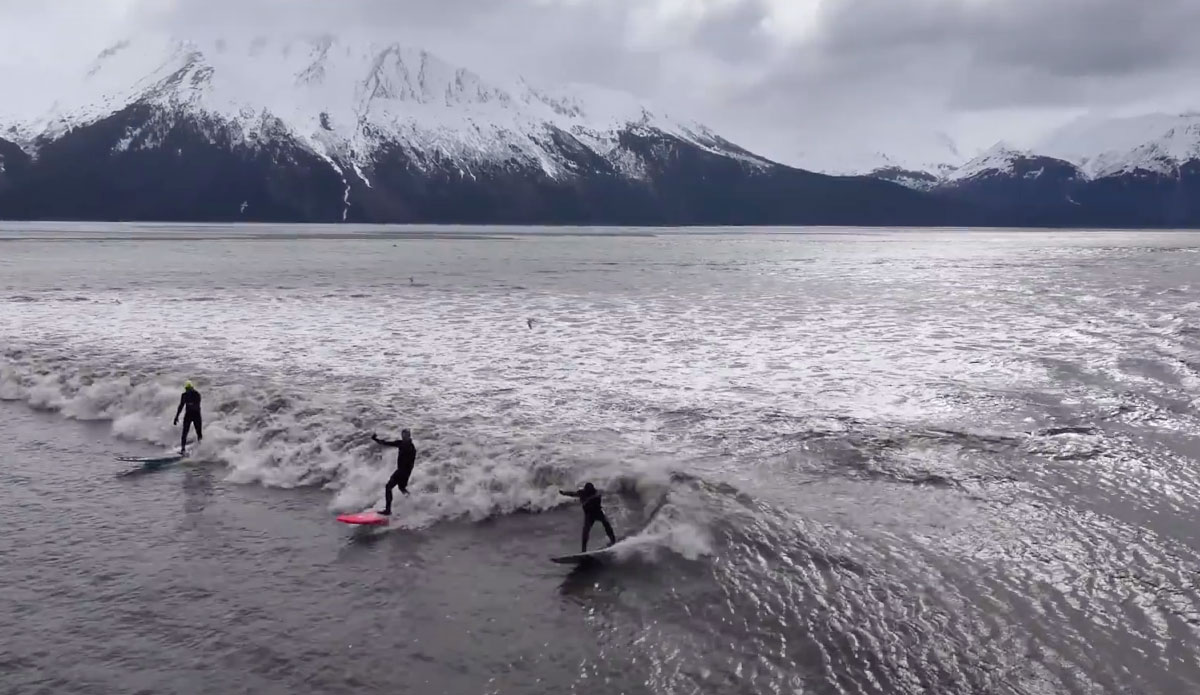
If you've ever stood on the mudflats outside Anchorage, you know about the bore tide. Most tides arrive the way you'd expect a tide to arrive, gradually, predictably, a line you can watch creep up the sand. The bore tide doesn't do that. The bore tide is a wall of water, sometimes six or eight feet high, that rolls in from Cook Inlet and travels up Turnagain Arm against the river, against the current, against your sense of how water is supposed to behave. Locals will tell you the strangest part isn't the size of it. It's that you’re standing on solid ground one minute and the next, water is arriving from everywhere at once. It’s deceptive, can be very dangerous and the unaware can pay the ultimate price.
That's what this year has felt like. Not a wave on the horizon I can point to and brace for, but a rising that's already here, coming from underneath and behind and in front, all at the same time.
In our industry, where most of our customers didn't sign up to be technologists but to build things. To run sites. To manage crews and concrete pours and weather delays and a thousand small fires that have nothing to do with whether their stack uses an LLM or which agent framework will still exist in six months. And yet, here we all are, suddenly being told that if we don't have an AI strategy by the end of the quarter, we'll be left behind, and oh, by the way, the tools we picked last quarter are already three generations stale. There's a new word for what's happening to our brains while we try to keep up.
Andrej Karpathy called it AI psychosis. He'd know. Karpathy is one of the founding members of OpenAI, the former director of AI at Tesla, and a Stanford-trained researcher who has spent his career at the absolute frontier of this field. He's also the person who recently coined two other terms you're going to keep hearing, vibe coding and LLM wikis. When Karpathy talks about where this technology is going, he's not guessing. He's looking down at his own hands.
And the way he described AI psychosis is what made it land for me. He's working on this stuff sixteen hours a day. That's not a hustle-culture flex, it's just the job. And in the middle of building something, he watches the thing he hasn't finished yet become obsolete. Somebody open-sources a better approach on GitHub overnight. Someone posts a paper on X that reframes the whole problem. A Reddit thread turns out to contain the answer he was about to spend the next week deriving. The work doesn't slow down. The ground under the work keeps moving.
If he feels that way, the rest of us would be nuts not to.
And the part I'm trying to be more vulnerable about is that I feel it too…deeply. I'm supposed to be one of the people who help others feel less of it. Some days, I do an okay job of that. Other days, I close my laptop and stare at the ceiling and wonder if the research paper I read this morning is already a footnote by lunchtime, whether the architecture I'm confidently sketching out will sound naive by Friday, whether the model my team standardized on last month is the model we should be migrating off next month. (Spoiler: probably yes, and also probably yes.)
The whole pitch of this technology is that it's supposed to make things easier. And in pockets, in real and meaningful ways, it does. I've watched a fifteen-minute task become a fifteen-second one. I've seen people who don't write code build working software. That's not nothing. That's a miracle, if you let yourself see it.
But the macro experience, right now, is harder, not easier. Harder in a new way. Harder because the menu has a thousand items on it, and the menu changes while you're reading it. Harder because the cost of standing still has gone up and the cost of moving wrong has gone up too. Harder because the people you serve are looking at you for clarity you don't entirely have.
So what do you do, when the world is rearranging itself fast enough that you can viscerally feel the shift, in the moment, not just in retrospect?
I don't have a clean answer. I don't think anyone does, and I'm increasingly suspicious of people who say they do. So here’s what I've been telling myself, and what I've been telling our customers when they ask.
You don't have to surf the whole tide. You just have to not drown. That means picking one thing, one workflow, one bottleneck, one annoyance you've been complaining about for two years, and trying the smallest possible version of an AI-assisted fix. Not a transformation. Not a strategy. A Tuesday afternoon experiment.
Curiosity beats certainty right now. The people I see doing best aren't the ones with the most confident roadmaps. They're the ones who treat every week like a small expedition. They poke at things. They try something new, and then they tell their team what they learned, including what didn't work. Hesitation is fine. Confusion is fine. Frozen is not.
Your domain knowledge is the moat, not the model. If you've been pouring foundations for thirty years, an AI that has read every concrete spec on the internet still doesn't know what you know about the soil on the east side of your county in March. The shift isn't from human expertise to machine expertise. It's from expertise expressed slowly to expertise expressed quickly. You're not being replaced by the tide. The tide is rising under everyone.
Talk about it. Out loud with peers. The single most useful thing I've done this year isn't a tool or a tactic, it's the conversations where I admitted I didn't know something and the other person exhaled and said thank god, me neither. If you're sitting in your office feeling like everyone else has figured this out and you're behind, I promise you, they haven't, and you aren't.
Here's the part I want to be careful about, because it's the part most likely to sound like hyperbole.
Humanity has been through monumental technology shifts before. The wheel. The printing press. Electricity. The internal combustion engine. The internet. In retrospect, each of them rearranged how we live, work, fight, eat, and think. Each was, in its own way, a complete reordering of the human experience. And each, crucially, gave us time. The wheel took millennia to reach everyone who would ever use one. The printing press took centuries to do its work. Even the internet, which felt fast at the time, gave us roughly thirty years between "interesting Pentagon project" and "load-bearing pillar of global civilization." We saw those changes coming from a long way off. We had the benefit of adjusting at a pace close to our own.
This one is not that.
Saying "it's not optional" sounds like the kind of thing a consultant says right before quoting you a rate. I wish it were. Look at where the capital is going, hundreds of billions of dollars, the largest infrastructure buildout in modern corporate history, every meaningful technology company in the world reorganizing its top-line strategy around this single thing within the span of about two years. The horse isn't going back in the barn. The barn is being rebuilt around the horse, and the horse is getting faster.
The closest analogy I've found is the difference between a hurricane and an earthquake. Both can be devastating. But with a hurricane, you get a warning. You get satellite images. You get days, sometimes a week, to board things up, move inland, and decide what matters. An earthquake just happens. The ground that was solid a second ago isn't anymore, and you find out what your house was actually built on.
I'm not saying that to scare anyone. I'm saying it because I think a lot of us have been treating this like a hurricane, watching the radar, planning the response, assuming there's a runway, when the honest read is that it's behaving more like the other thing. The opportunities are real, and they're already here. The impact is showing up in every aspect of our lives, and it's accelerating at a rate we have, genuinely, no historical reference for.
I keep coming back to the bore tide image because of the part that’s underplayed. People surf the bore tide. They wait for it. They paddle out into a place that, fifteen minutes earlier, was mud. Knowing the water will come, knowing it'll come from a direction that doesn't entirely make sense. They don't pretend the wave is smaller than it is. They don't pretend they understand it perfectly. They just decide that the right place to be, when something this big arrives, is in the water.
I don't know what our industry looks like in two years. I genuinely don't, and anyone who tells you they do is either in denial, selling something, or hasn't been paying attention. I'm writing this from between the literal rocks and a hard place, between customers who need answers I don't fully have, and a technology landscape that won't sit still long enough for anyone, much less me, to draw a proper map of it. That's where I am. I think that's where a lot of us are.
But like every hard, unknown thing, the move is the same. You start. You start small. You start scared if you have to. You tell someone you're starting, so you have to keep going. And when the water comes in from a direction you didn't expect, you let it lift you instead of bracing against it.


