EcoTerra: Novato Yard Base Rock 1/2 price @ $5/ton
View Deal


.png)

Explore
.svg)
Who We Serve
.svg)
Media Hub
.png)
Other Links
.svg)
Sitting across from bulk materials producers whose companies had been around for 75 years. Talking with estimators who had built careers on gut instinct, yellow legal pads, and relationships that stretched across decades. Meeting contractors whose fathers, and grandfather, had done business the same way.
And trying to convince them that change wasn’t just coming… it was accelerating.
In heavy construction, longevity is a badge of honor. A “middle-aged” business might already have three generations behind it. Tenures are long. Reputations are earned slowly. Trust is currency. This is an industry built on relationships, grit, and execution.
So when we started saying that a technological tsunami was forming offshore, that it would define survival, that companies would either learn to ride a 100-foot wave or risk being washed out, it didn’t always land well.
It felt dramatic. Overstated. Maybe even disrespectful to the way things had always worked.
And candidly, it was exhausting. Convincing seasoned operators that software, AI, data, fintech, automation, these weren’t Silicon Valley buzzwords. They were forces that would reshape margins, workflows, talent pipelines, and competitive advantage.
For a long time, adoption lagged. Interest was polite. Pilots were tentative. Budgets were thin. Construction, among the top ten industries in the U.S., consistently ranked at or near the bottom in IT spending and workplace technology adoption.
We all said technology mattered.
But we weren’t acting like it did.
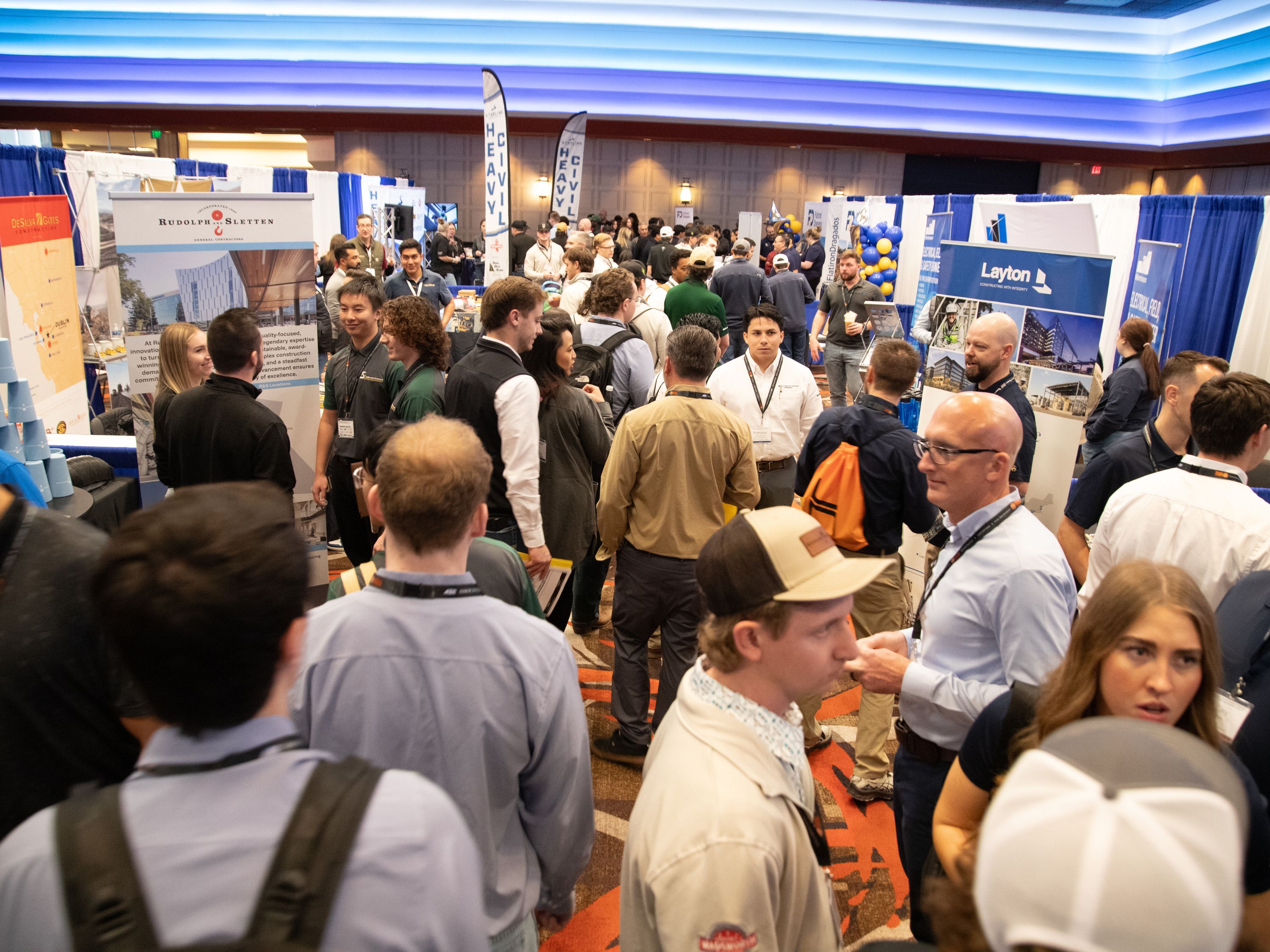
Recently, I had the honor of serving as the keynote speaker at the Associated Schools of Construction (ASC) Annual Competition, ASC Region 6 & 7, hosted at asc67.com. Thousands of students from dozens of universities gathered to compete in categories ranging from heavy civil, commercial, and mixed-use to design-build, sustainability, virtual design and construction, and research.
Picture this: ballrooms filled with laptops. Students huddled around bid packages at midnight. Industry sponsors mentoring teams in real time. Faculty advisors who have poured their careers into preparing the next generation.
The energy was electric.
My talk was titled “The Last Frontier to The New.”
Growing up in Alaska, “The Last Frontier”, shapes how you see the world. Alaska represents resilience, independence, and raw possibility. It’s a place where you respect the elements because they can humble you fast.
I used that lens to talk about what I believe construction is standing in front of right now: a new frontier. Not geographic, but technological.
A frontier defined by AI-native workflows. Connected data. Embedded finance. Automation. Predictive analytics. Digitally fluent teams.
And what struck me most wasn’t just the enthusiasm of the students.
It was the posture of the room.
Faculty. Industry executives. Sponsors. Superintendents. Estimators. Leaders from some of the most established companies in the country.
They weren’t skeptical.
They were leaning in.
Holding out their hands.
Asking:
What’s coming?
How do we prepare?
What should we be teaching?
What should we be building?
That’s new.
Recent Construction Industry Management (CIM) student exit surveys asked graduates what matters most as they enter the workforce. Technology ranked second among the issues they care most about.
At the recent HCSS UGM Conference, industry professionals were asked a similar question, what’s most pressing in their businesses? Again, technology rose to the top.
There’s alignment across generations: students and seasoned operators both recognize the stakes.
And yet, here’s the tension.
Recognition is not the same as action.
Construction still ranks dead last among the top U.S. industries in IT spending and workplace tech adoption. That gap, between awareness and execution, is where the real risk lives.
If we want to meet today’s demands, compressed schedules, tighter margins, labor shortages, we need better tools.
If we want to attract and retain the next generation of talent, the students I saw at ASC, we need modern systems.
They are not walking into the workforce expecting fax machines and fragmented spreadsheets.
They are digital natives.
And they are ready.
I spend my days dreaming, designing, and building construction technology. And I’ll be honest, many days it feels overwhelming.
The pace of advancement is lightning fast. AI models evolve weekly. New integrations launch constantly. Entire workflows that once took months can be automated in days.
Very few people can see around the corners right now.
I certainly can’t tell you exactly what next year will look like, much less five years from now.
But I do know a few things:
The good news? Construction has always known how to adapt under pressure.
We’ve built through recessions. Through supply chain shocks. Through labor shortages. Through regulatory changes. Through material volatility.
We know how to solve hard problems.
This is just a different kind of jobsite.
One of the most beautiful things about construction is its relational fabric.
We trust people. We call peers for advice. We learn from what worked on someone else’s project. We pass down wisdom across generations.
That muscle is still our superpower.
But now we have to apply it differently.
Talk to your peers about what they’re adopting, and why.
Ask how they handled change management.
Pay attention to companies making real inroads in digital adoption.
Learn what failed and what succeeded.
Bring those lessons back to your organization.
The companies winning won’t be the ones with the flashiest software demos.
They’ll be the ones that:
For years, it felt like we were pointing at the horizon trying to convince people the swell was building.
Now, you can feel it.
In classrooms.
At industry conferences.
In boardrooms.
On jobsites.
The conversations have changed from “Why would we?” to “How do we?”
That’s a shift.
And it’s happening fast.
Construction has always been a frontier industry, building roads where there were none, shaping skylines, connecting communities. We know how to operate in rugged terrain.
Now we’re standing at a new frontier.
Not one of geography, but of possibility.
If we ride this wave together, owners, contractors, suppliers, technologists, educators, students, we don’t just survive it.
We define it.
And for the first time in a long time, it feels like the industry is ready to paddle.


