EcoTerra: Novato Yard Base Rock 1/2 price @ $5/ton
View Deal


.png)

Explore
.svg)
Who We Serve
.svg)
Media Hub
.png)
Other Links
.svg)
Part 8 of 10 | The Heavy Civil Supplier's Guide to Getting Found
By Ryan Brown, Chief Customer Officer, Bulk Exchange
Every material supplier I talk to tells me the same three things about their business. We deliver on time. Our material meets spec. Our people know what they are doing.
Every one of their competitors says it too, in almost the same words, on a website a contractor could not tell apart from theirs. Those three claims cancel each other out the moment a project engineer opens four supplier sites in four browser tabs.
There is one kind of content that does not cancel out. A record of a real project you supplied, with the numbers attached. Most suppliers already have dozens of them sitting in dispatch records and scale house tickets, and almost none of them have ever written one down.
A project case study for a material supplier is a short written account of one job you supplied. It names the project type, the material and volume you provided, the constraint you worked around, and the outcome, with real numbers where you can share them.
It is not a testimonial. A testimonial is your customer saying you were great. A case study is you showing the work, in enough detail that a contractor reading it can picture their own project in it. Nobody has to take your word for anything, because the specifics do the arguing for you.
Part 7 covered reviews, and reviews do real work. A case study does something a review cannot. It proves you have already handled the exact situation the contractor is standing in right now.
Two pieces of research explain why that matters more than most suppliers assume.
The Content Marketing Institute's B2B Content Marketing Benchmarks study found that 53 percent of B2B marketers rated case studies and customer stories among the content types producing their best results, second only to video. Marketers across every industry keep landing on the same answer about what actually converts.
The second one should get your attention more. 6sense's 2025 B2B Buyer Experience Report found that 94 percent of buying groups had already ranked their preferred vendors before they made first contact, and buyers ended up purchasing from that early favorite 77 percent of the time. The ranking happens during research, before your phone rings. Your case studies are what a contractor reads while that ranking gets made.
There is a third reason, and it is newer. AI search tools pull from content that contains specific, verifiable detail. We covered that idea in Part 1 when we introduced Generative Engine Optimization. When a project manager asks ChatGPT or Perplexity which suppliers can handle a large fill job on a compressed schedule in their region, generic claims about quality and service give an AI tool nothing to work with. A page describing 60,000 tons of structural fill delivered across an eleven week schedule gives it plenty.
You do not need a design agency or a marketing department. You need five pieces of information written plainly.
Somewhere between 400 and 800 words covers all five. Longer than that and nobody finishes it.
The reason suppliers skip this is that it sounds like a project. It is not. The information is sitting in systems you already run.
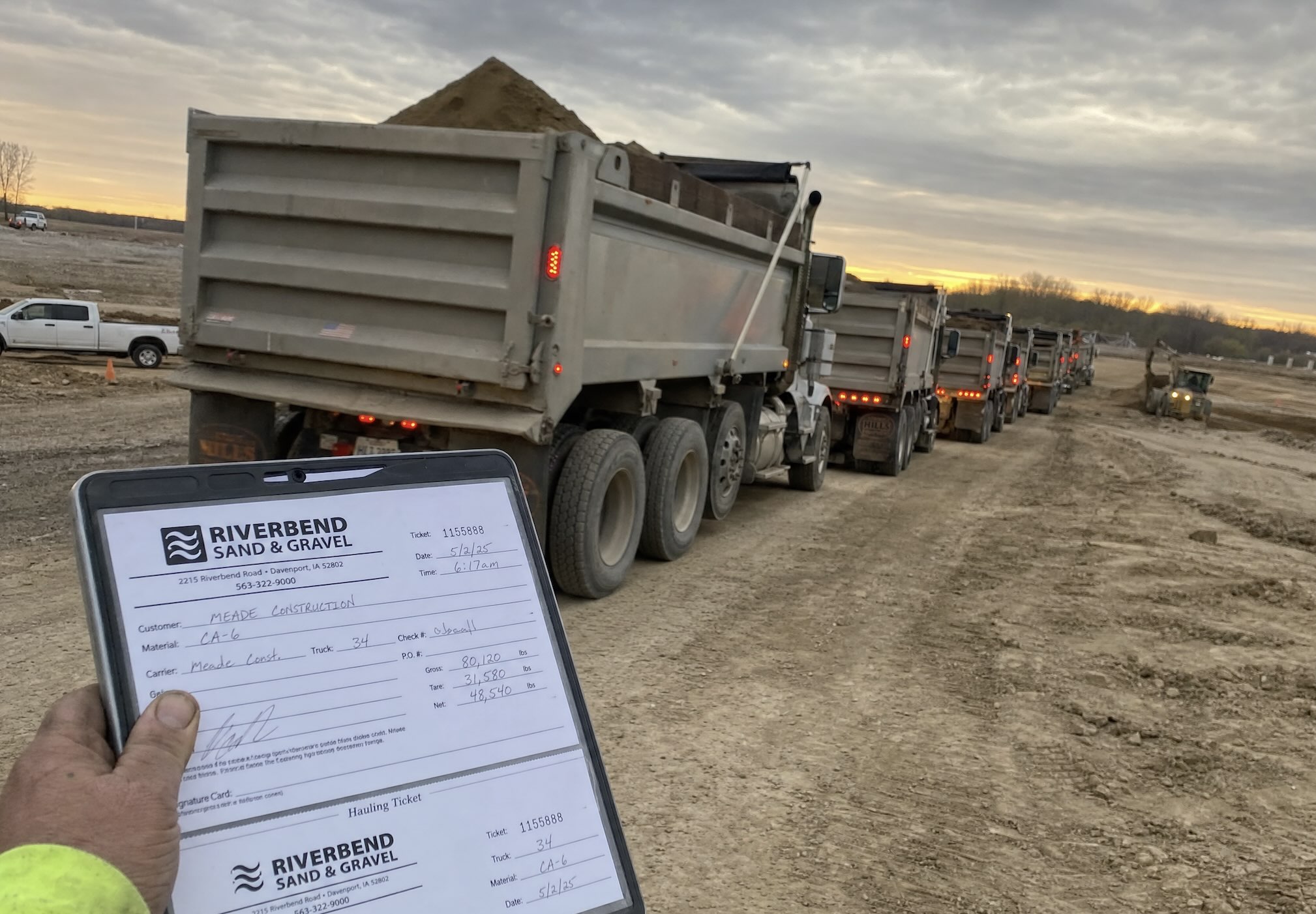
Dispatch records tell you truck counts and delivery windows. Scale tickets give you exact tonnage. Your QC records show which spec the material met. Your dispatcher or plant manager remembers the week the schedule moved and what you did about it. Somebody on your crew has a phone full of photos from the yard and the job site.
Pull one completed project, sit down with the person who ran it, and ask five questions. What were we building. What made it hard. What did we send. What did we do when it got complicated. How did it end. Write down what they say. That interview takes twenty minutes and produces a better case study than anything a copywriter could invent.
One case study can work in five places at once.
Give each one its own page on your website rather than burying them all on a single projects page. Part 3 covered why individual pages matter for search, and it applies here. A page titled around the project type and region can rank for searches no homepage will ever touch.
Post it to your Google Business Profile as an update, the way we described in Part 2. Break it into a LinkedIn post with one photo and the key numbers, which is exactly the content Part 6 called for. Add it to your Bulk Exchange profile, where contractors are already sourcing material and comparing suppliers on more than a phone number. Send it to a prospect who is bidding something similar, which is the single highest converting use of the whole thing.
Ask. Most contractors will say yes, especially if you are describing the project well and giving their team credit. If they prefer not to be named, write it without the name. A case study about a DOT interchange project in the Southeast still carries the specifics that make it convincing.
Three to five covering different project types and materials beats twenty covering the same job over and over. Aim for one a quarter and you will have a strong library inside two years.
Those are often the best ones. A case study describing how you recovered a delivery schedule after two weeks of rain proves something no flawless project can. Contractors have all been rained out. They know what it costs.
400 to 800 words. Long enough for the five elements, short enough that a busy estimator reads all of it.
One project. One afternoon. More persuasive than everything else on your website put together.
Next week, we look at how to show up when a contractor asks an AI assistant to recommend a supplier, and what actually makes ChatGPT, Perplexity, and Google's AI Overviews name your business instead of a competitor's.
Ryan Brown is Chief Customer Officer at Bulk Exchange, the construction industry's trusted platform for sourcing and discovering bulk materials in heavy civil construction. Bulk Exchange connects contractors with aggregate suppliers, ready mix producers, fill material providers, disposal sites, and other bulk material sources across the United States. Learn more at bulkexchange.com.
Series. The Heavy Civil Supplier's Guide to Getting Found
Part 1. Why Heavy Civil Material Suppliers Are Invisible Online (And Why That's About to Change)
Part 2. Why Your Google Business Profile Might Be Your Most Valuable Free Marketing Tool
Part 3. Does Your Quarry or Plant Website Actually Help Contractors Find You?
Part 6. Why LinkedIn Is the Most Underused Sales Tool for Heavy Civil Material Suppliers
Part 7. Why Contractor Reviews Are the Hidden Marketing Asset Heavy Civil Suppliers Ignore
Part 8. How Heavy Civil Material Suppliers Can Use Project Case Studies to Win New Business
Part 9. How to Get Your Supplier Business Recommended by ChatGPT, Perplexity, and Google's AI Overviews (Coming next week)
Related topics. construction material supplier case study, project case studies for aggregate suppliers, heavy civil supplier marketing, how to write a case study for a quarry, ready mix plant project examples, contractor proof content, supplier credibility online, heavy civil supplier marketing series, The Heavy Civil Supplier's Guide to Getting Found


